|
Hull HU3 1LWhire Chess Association Year Book 2017-2018 |
|||||||||||||||||||||||||||||||
|
|
|||||||||||||||||||||||||||||||
|
Contents |
Calendar of Events – Results/Reports |
||||||||||||||||||||||||||||||
|
|
Hymers College
The original Hymers College was established as a school for boys “in whatever social rank of life it may be found among the vast and varied population of the town and port of Hull”, under terms for the purpose in the will of the Cambridge graduate, mathematician and Classical scholar, the Rev. John Hymers. (So it’s not “Hymer’s College”.)
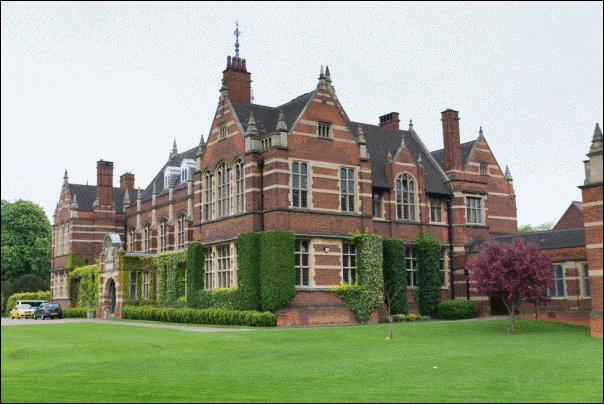
The building was completed in 1893, on a 38-acre site once occupied by the Botanic Gardens. The architects were Messrs. Botterill, Son & Bilson. The architectural style has been described as Jacobean, and features red brick with Ancaster stone dressings.
The college first took in pupils in the same year, 1893. It is now a co-educational independent day school catering for about 950 pupils, and has about 100 on the teaching staff.
John Hymers was born on 20/07/1803, at Ormesby-in-Cleveland (now a suburb of Middlesbrough), and died on 07/04/1887, at Brandesburton, where he had been rector since 1852. (Brandesburton is about 12 miles, as the crow files, north of Hull, and 6 miles inland from Hornsea.)
John Hymers’ original devise for the foundation of the college was in fact void under “mortmain” law. (It relied of the sale of that which could not in law be sold.) However, his brother, Robert Hymers agreed to the apportionment of £50,000 for the purpose. A further £3,000 was bequeathed, of which £2,000 was to provide scholarships for Brandesburton boys.
|
||||||||||||||||||||||||||||||